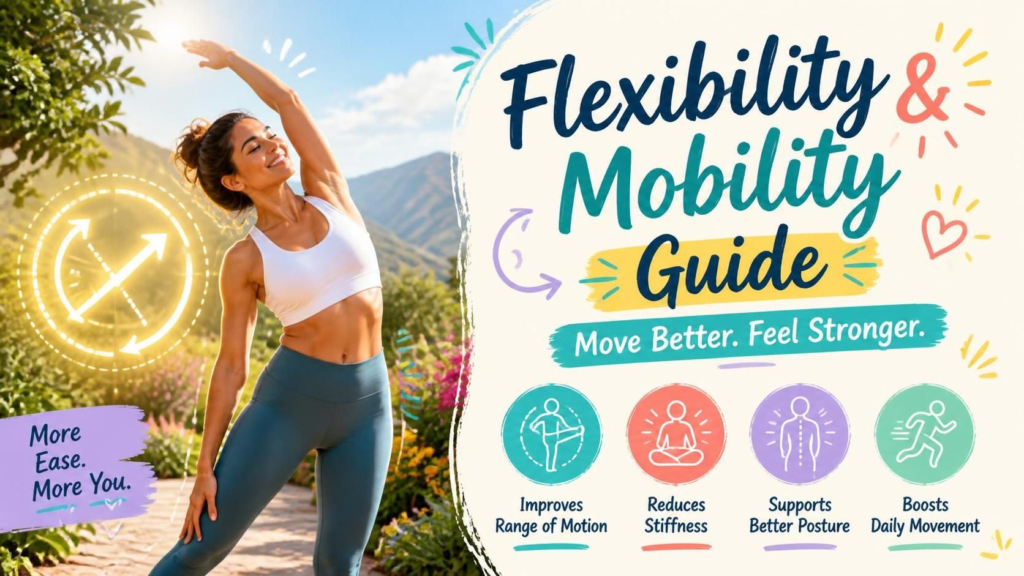
Flexibility & Mobility training helps you move with greater ease, maintain a healthy range of motion, and support comfortable movement during workouts and everyday activities. Flexibility describes how much a muscle can lengthen, while mobility refers to how well a joint can move through its range of motion with control. Together, flexibility and mobility can support better movement quality and complement strength and cardio training.
Whether you are a beginner, an active adult, a runner, or someone who spends long hours sitting, regular mobility work can be adapted to your needs. A balanced routine may include dynamic movements before exercise, controlled mobility drills, and gentle stretching as part of recovery.
Why Flexibility & Mobility Matter
- Improve movement quality: Better range of motion can make everyday movements and exercise techniques more comfortable and controlled.
- Support joint mobility: Regular movement through a comfortable range can help maintain functional joint motion.
- Complement strength training: Adequate mobility can help you perform exercises with appropriate positioning and control.
- Support active lifestyles: Mobility work can be useful for runners, strength trainees, recreational athletes, and people who sit for extended periods.
Flexibility vs. Mobility: What’s the Difference?
Flexibility & Mobility are related but not identical. Flexibility generally refers to the ability of muscles and surrounding tissues to lengthen, while mobility involves the movement of a joint through its available range with control. You can therefore have good flexibility in a particular muscle but still have limited active mobility at the joint.
| Approach | Common Use | Key Focus |
|---|---|---|
| Dynamic Mobility | Before workouts and during warm-ups | Controlled movement through a range of motion |
| Static Stretching | After exercise or dedicated flexibility sessions | Holding a comfortable stretched position |
| Mobility Drills | Daily movement practice | Joint control, range of motion, and movement quality |
Dynamic Warm-Ups and Mobility Exercises
Flexibility & Mobility training can include dynamic warm-ups that use controlled movement rather than holding a stretch for a long period. Common examples include arm circles, leg swings, hip rotations, bodyweight squats, and gentle torso rotations. These movements can prepare the body for the activity that follows while allowing you to gradually increase your range of motion.
Yoga and Stretching for Flexibility
Yoga and structured stretching can complement a broader flexibility and mobility routine. Poses and stretches that involve the hips, hamstrings, calves, shoulders, and spine can help you practice controlled movement and comfortable stretching. Choose movements appropriate for your current ability rather than forcing a deeper range of motion.
Mobility for Runners, Lifters, and Desk Workers
- For runners: Include ankle, calf, hip, and hamstring mobility to support comfortable running mechanics.
- For strength trainees: Focus on the joints and movement patterns required for exercises such as squats, presses, and pulling movements.
- For desk workers: Regular movement breaks and gentle hip, chest, shoulder, and upper-back mobility can help counter long periods of sitting.
How Often Should You Do Mobility Exercises?
Mobility work can be incorporated into a daily routine or performed several times per week depending on your goals and training schedule. Short, consistent sessions are often easier to maintain than occasional long sessions. Before demanding exercise, prioritize dynamic mobility and activity-specific warm-ups; use static stretching when it fits your training and recovery routine.
Back Pain and Flexibility Exercises
If your goal is to improve comfortable movement around the back and hips, our guide to Stretches to Relieve Back Pain Fast provides a more specific resource. For persistent, severe, or unexplained pain, seek advice from an appropriate healthcare professional rather than relying only on stretching.
Frequently Asked Questions About Flexibility & Mobility
What is the difference between flexibility and mobility?
Flexibility mainly describes how much a muscle and surrounding tissues can lengthen, while mobility describes how well a joint can move through its range with control.
Should I stretch before or after a workout?
Dynamic movement is generally useful as part of a warm-up before exercise. Longer static stretches can be included after exercise or during a separate flexibility session.
Can I do mobility exercises every day?
Many people can include gentle mobility work regularly, provided the movements are appropriate for their ability and do not cause pain. Frequency should also match your overall training and recovery needs.
Explore More Fitness Resources
Flexibility & Mobility training is one part of a balanced fitness routine. Visit the Fitness & Training main page to explore strength and conditioning, cardio and endurance, weight loss and nutrition, and other fitness resources.