Table of Contents
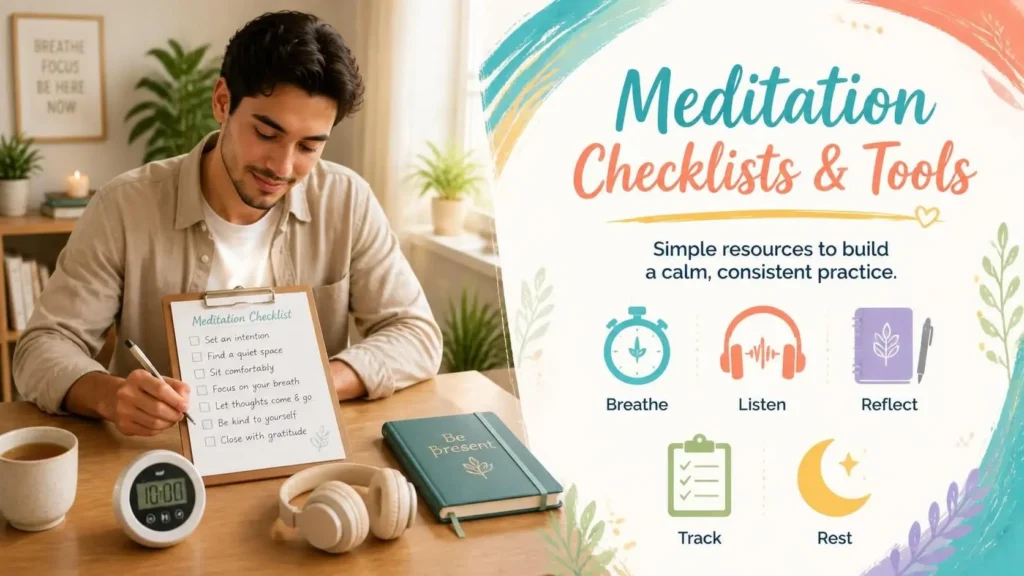
Meditation Checklists & Tools at Wellness Advice Hub are designed to make meditation and mindfulness practices easier to organize and maintain. A simple checklist, timer, journal, or prepared practice space can remove some of the friction that makes it difficult to establish a regular routine.
Whether you are completely new to meditation or already have an established practice, practical tools can help you decide what to do, keep track of your sessions, and create a routine that fits your everyday life. For broader information about mindfulness and meditation, explore our Meditation & Mindfulness section.
Why Use Meditation Checklists & Tools
Meditation does not require expensive equipment or a complicated setup. However, having a few practical tools can make it easier to turn an intention into a repeatable habit.
- Reduce decision-making: A simple checklist can tell you what to prepare and which practice you want to follow.
- Create structure: A timer or planned session length can give your practice a clear beginning and end.
- Track your routine: A journal or habit tracker can help you see how consistently you are practicing.
- Support different practices: You can use different tools for breathing, body scans, guided meditation, or quiet mindfulness.
Simple Meditation Techniques for Beginners
There is no single meditation technique that works for everyone. Beginners can experiment with several simple approaches and choose the one that feels comfortable and realistic to practice regularly.
- Breath-focused meditation: Bring your attention gently to the natural rhythm of your breathing. When your attention wanders, notice it and return to the breath.
- Body scan: Move your attention gradually through different areas of the body, simply noticing physical sensations without needing to change them.
- Mantra or word repetition: Quietly repeat a simple word or phrase as an anchor for your attention.
- Guided meditation: Follow spoken instructions that guide your attention through breathing, body awareness, visualization, or relaxation. You can explore our Guided Meditation & Breathing resources for more ideas.
Practical Meditation Checklists & Tools for Daily Practice
The most useful tools are often simple. You can create your own meditation kit using items you already have or use printable resources to make your routine easier to follow.
- Meditation checklist: Prepare a short list covering your space, posture, timer, chosen practice, and any notes you want to make afterward.
- Timer: Choose a realistic session length, such as five or ten minutes, and gradually adjust it according to your preferences.
- Practice journal: Record the date, duration, type of practice, and a brief note about how the session felt.
- Comfortable practice space: Choose a place where you can sit comfortably and reduce unnecessary interruptions.
- Guided resources: Use reliable meditation instructions when you prefer having someone guide you through a session. Mindful.org’s meditation guide provides an additional introduction to meditation practice.
Handling Distractions and Common Meditation Challenges
A common misunderstanding is that successful meditation requires an empty mind. Thoughts, sounds, physical sensations, and changes in attention are normal parts of the experience. The practice is often about noticing where your attention has gone and gently bringing it back.
If you feel restless, uncomfortable, or distracted, make a practical adjustment. Change your posture, shorten the session, move to a quieter location, or try a different technique. There is no need to turn meditation into another source of pressure.
If stress or anxiety is an important reason you are exploring meditation, you can also visit our Stress & Anxiety Relief section for additional relaxation and mindfulness practices.
Build a Consistent Mindfulness Routine
Consistency is usually easier when a new habit has a clear place in your day. Choose a time that realistically fits your schedule rather than selecting a routine that looks ideal but is difficult to maintain.
- Start small: A short session can be a practical starting point when you are building a new routine.
- Choose a regular time: Linking meditation to an existing part of your day can make it easier to remember.
- Track your sessions: Use a simple checklist or journal rather than relying on memory.
- Allow flexibility: If you miss a session, simply return to the practice when you can.
For additional relaxation and evening practices, explore Sleep & Recovery.
Explore More Meditation Resources
Use these Meditation Checklists & Tools as practical support rather than as a strict formula. The goal is to make meditation easier to organize, practice, and return to over time.
- Guided Meditation & Breathing — explore guided practices and breathing techniques.
- Meditation & Mindfulness — visit the main section for broader mindfulness resources.
- Stress & Anxiety Relief — explore additional relaxation and stress-management resources.
- Courses — return to the complete collection of Wellness Advice Hub learning resources.
Choose one simple practice, prepare the tools that make it easier, and give yourself room to build a mindfulness routine gradually.