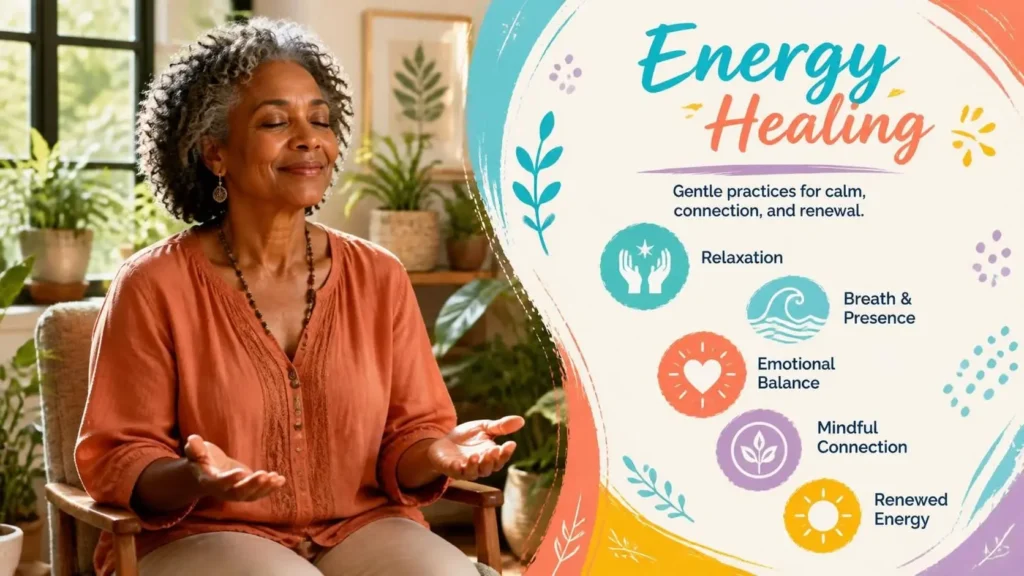
Energy Healing refers to a range of complementary and traditional wellness practices that focus on relaxation, mindful attention, body awareness, and a sense of energetic balance. Practices such as Reiki, sound-based relaxation, chakra meditation, breathwork, and grounding are used by some people as part of their personal wellness routines.
These approaches vary considerably in their traditions and underlying beliefs. Some are rooted in cultural or spiritual systems, while others are practiced mainly as relaxation or mindfulness activities. They should be viewed as complementary wellness practices rather than replacements for medical care. For additional relaxation strategies, explore our Sleep & Recovery guide.
The National Center for Complementary and Integrative Health (NCCIH) provides information about complementary, alternative, and integrative health approaches and emphasizes the importance of understanding what is known about their safety and effectiveness.
Popular Types of Energy Healing Practices
Energy-focused wellness includes a variety of practices. Their purposes, traditions, and proposed mechanisms differ, so it is useful to approach them with an open but informed perspective.
Reiki: Reiki is a Japanese practice in which a practitioner places their hands lightly on or near the body. People may use Reiki as a relaxation practice or as part of a broader personal wellness routine.
Chakra Practices: Chakra systems come from traditional spiritual and philosophical traditions. Chakra meditation and visualization are commonly used for reflection, relaxation, and focused attention.
Crystal and Gemstone Practices: Crystals and gemstones are used in some spiritual and wellness traditions. People may incorporate them into meditation, personal rituals, or relaxation spaces based on their individual beliefs.
Breathwork: Conscious breathing can be practiced independently or alongside other energy-focused traditions. Our guide to breathing techniques to increase body energy explores practical breathing exercises that can be incorporated into a daily routine.
Sound Therapy and Vibrational Practices
Sound-based practices are another area commonly associated with energy and relaxation work. They may include singing bowls, tuning forks, chanting, ambient sounds, or recorded tones.
Tibetan Singing Bowls and Tuning Forks: These instruments produce sustained tones and vibrations that some people find calming during meditation or relaxation sessions.
Binaural Beats: Binaural beats use two slightly different tones presented separately to each ear. They are often used in relaxation, meditation, or sleep-oriented audio, although individual experiences can vary.
Chanting and Mantras: Repetitive vocal sounds or phrases can provide a focal point during meditation. If you enjoy combining sound with guided practices, explore our Guided Meditation & Breathing resources.
For practical strategies that focus specifically on managing everyday stress and relaxation, you can also visit our Stress & Anxiety Relief guide.
Chakra Meditation and Subtle Energy Concepts
Chakras are traditionally described as energy centers within certain spiritual and philosophical systems. Different traditions describe their number, location, and characteristics in different ways.
Modern wellness practices may use chakra meditation, visualization, breathing, or focused attention as tools for reflection and relaxation. These practices can be meaningful to people who connect with the traditions behind them, but chakra systems should not be confused with medically established anatomical structures.
A simple meditation session might involve sitting comfortably, focusing on slow breathing, visualizing a particular color or energy center, and allowing thoughts to come and go without judgment.
Simple Daily Practices for Energy Healing
You do not need specialized equipment to explore energy-focused wellness practices. Many people begin with simple activities that encourage relaxation and body awareness.
- Mindful breathing: Spend a few minutes paying attention to slow, comfortable breaths.
- Grounding: Take a quiet walk outdoors and notice the sensations around you, such as your surroundings, breathing, and movement.
- Meditation: Use focused attention, visualization, or a guided meditation as a short daily relaxation practice.
- Gentle movement: Combine stretching, mindful walking, yoga, or Tai Chi with awareness of how your body feels.
- Relaxing sounds: Use calming music, ambient sounds, or other audio that helps create a peaceful environment.
The goal is not to perform a perfect routine. Choose practices that feel comfortable and realistic for your lifestyle, and treat them as opportunities for relaxation and self-awareness.
Creating a Peaceful Space for Energy Practices
Your surroundings can make it easier to settle into a relaxation or meditation practice. Choose a quiet and comfortable space where you are unlikely to be interrupted.
You might dim the lights, use comfortable seating, play soft background sounds, or keep a few objects that help you associate the space with relaxation. Candles or incense may also be used if you enjoy them and can use them safely.
A simple environment can support consistency without requiring expensive equipment or complicated rituals. Even a few quiet minutes devoted to breathing or meditation can become a useful transition between periods of activity and rest.
Integrating Energy Practices With Movement
Energy Healing practices can also be combined with gentle physical activity and mindful movement. Activities such as yoga, Tai Chi, stretching, and mindful walking can encourage attention to breathing, posture, movement, and bodily sensations.
For people who prefer more active forms of wellness, our Fitness & Training resources provide practical approaches to movement and exercise, while Meditation & Mindfulness offers additional practices focused on awareness and relaxation.
Combining movement with mindful attention does not require adopting a particular spiritual belief. It can simply be a way to become more aware of your breathing, physical sensations, and surroundings while you move.
Frequently Asked Questions About Energy Healing
What is Energy Healing?
Energy Healing is a broad term used for various complementary and traditional practices that focus on concepts such as energetic balance, relaxation, body awareness, or spiritual well-being. Examples include Reiki, chakra meditation, and other energy-focused practices.
Is Reiki safe for beginners?
Reiki is generally considered a low-risk complementary practice when used as a relaxation activity. However, it should not be used as a substitute for medical diagnosis or treatment. Anyone with a health concern should continue to follow appropriate professional medical advice.
Do crystals have proven healing properties?
Crystals are used in various cultural, spiritual, and personal wellness traditions. There is not sufficient scientific evidence to establish crystals as medical treatments for diseases or health conditions. They can, however, have personal meaning as part of meditation or relaxation rituals.
Can sound therapy help with relaxation?
Some people find calming sounds, music, singing bowls, or other forms of sound-based practice relaxing. Individual responses vary, and research into different sound-based approaches continues to develop.
Can Energy Healing replace medical treatment?
No. Energy-focused practices should not replace professional medical evaluation, diagnosis, or treatment. They may be used as complementary wellness activities when appropriate.
Start Exploring Energy Healing
Energy Healing encompasses many different traditions and practices, so there is no single routine that works for everyone. You can begin with a simple breathing exercise, meditation, mindful movement, sound-based relaxation, or another practice that fits your personal preferences.
If you are interested in exploring related areas, our Guided Meditation & Breathing guide offers practical relaxation practices, while our Stress & Anxiety Relief hub focuses on everyday approaches to managing stress and creating calmer routines.
You can also return to the main Mind & Body Balance pillar to explore how energy-focused practices connect with broader wellness topics such as holistic health, mindset, movement, and everyday habits.