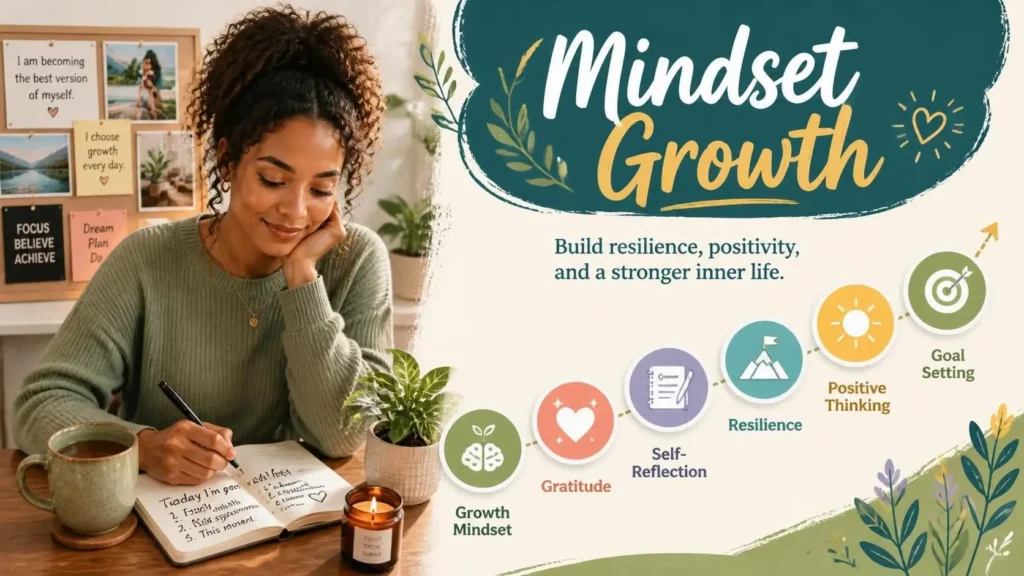
Mindset Growth is an important part of overall well-being. Developing self-awareness, emotional resilience, healthy habits, and a constructive approach to everyday challenges can support a more balanced and intentional life.
Personal growth does not require becoming a different person overnight. It can begin with small, consistent practices such as reflection, journaling, setting realistic goals, managing everyday stress, and making time for activities that support mental and emotional well-being. For relaxation and present-moment awareness, explore our Meditation & Mindfulness resources.
Table of Contents
Cultivating a Strong Mind and Healthy Perspective
A healthy mindset is not about staying positive all the time. It is about developing the ability to recognize challenges, reflect on experiences, and respond to difficulties in constructive ways.
Practices such as self-reflection, realistic goal-setting, gratitude, and stress management can help create greater awareness of everyday thoughts and behaviors. For additional strategies, explore our Stress & Anxiety Relief guide.
Building Mental Resilience
- Develop a growth-oriented mindset: View challenges as opportunities to learn, while recognizing that setbacks are a normal part of life.
- Practice gratitude: Regularly noticing positive aspects of everyday life can encourage greater awareness and appreciation.
- Strengthen self-discipline: Build manageable routines and follow through on realistic commitments rather than relying entirely on motivation.
- Learn to manage stress: Combine healthy routines with practical relaxation and coping strategies.
Positive Thinking Without Ignoring Reality
Positive thinking can be useful when it encourages realistic hope, constructive action, and a more balanced perspective. It does not mean ignoring difficult emotions or pretending that problems do not exist.
Simple practices such as positive self-talk, reflection, visualization, and identifying achievable next steps can help people approach personal goals with greater clarity. The goal is not to eliminate negative thoughts, but to develop healthier ways of responding to them.
For readers interested in complementary wellness practices, our Energy Healing guide explores different traditions and practices while distinguishing them from established medical treatments.
Journaling and Self-Reflection Techniques
Journaling can provide a simple space to organize thoughts, reflect on experiences, and clarify personal priorities. There is no single correct way to journal, so choose a method that feels practical and sustainable.
- Morning reflection: Write briefly about how you feel, what matters today, and what you want to accomplish.
- Guided journal prompts: Explore questions about habits, emotions, challenges, values, and personal goals.
- Evening reflection: Review what went well, what was difficult, and what you learned from the day.
- Goal-setting: Break larger objectives into specific, achievable steps and review your progress regularly.
Self-reflection can also complement a broader approach to wellness. Explore our Holistic Health & Wellness resources for practical ideas covering lifestyle, nutrition, movement, sleep, and everyday well-being.
Creating Sustainable Personal Growth Habits
Personal growth becomes more practical when it is connected to everyday habits. Instead of trying to change everything at once, choose one or two areas that matter to you and build gradually.
- Set realistic goals and divide them into smaller actions.
- Make time for reflection without turning it into another source of pressure.
- Include regular movement and adequate sleep as part of your overall routine.
- Use mindfulness, breathing, or relaxation practices when they fit your needs.
- Review your progress periodically and adjust your goals when circumstances change.
For a broader view of the relationship between lifestyle habits, mental well-being, and physical wellness, return to Mind & Body Balance.
Frequently Asked Questions About Mindset Growth
What is Mindset Growth?
Mindset Growth refers to developing greater self-awareness, resilience, constructive thinking patterns, and habits that support personal development and everyday well-being.
Can journaling help with personal growth?
Journaling can be a useful self-reflection practice. Writing about experiences, emotions, goals, and challenges may help you identify patterns and clarify what you want to work on.
Does positive thinking mean ignoring negative emotions?
No. Healthy positive thinking does not require suppressing difficult emotions. A more balanced approach is to acknowledge challenges while looking for realistic ways to respond and move forward.
How can I start working on personal growth?
Start with one manageable area, such as improving your daily routine, keeping a journal, setting a small goal, practicing mindfulness, or developing a healthier response to everyday stress. Consistency is generally more practical than trying to make many major changes at once.
Continue Exploring Mindset Growth
Mindset Growth is a gradual process of learning, reflection, and building habits that support the kind of life you want to create. Choose practices that are realistic for your circumstances and give yourself room to adjust as you learn more about what works for you.
Continue exploring related topics through Meditation & Mindfulness, Stress & Anxiety Relief, Holistic Health & Wellness, and Energy Healing.