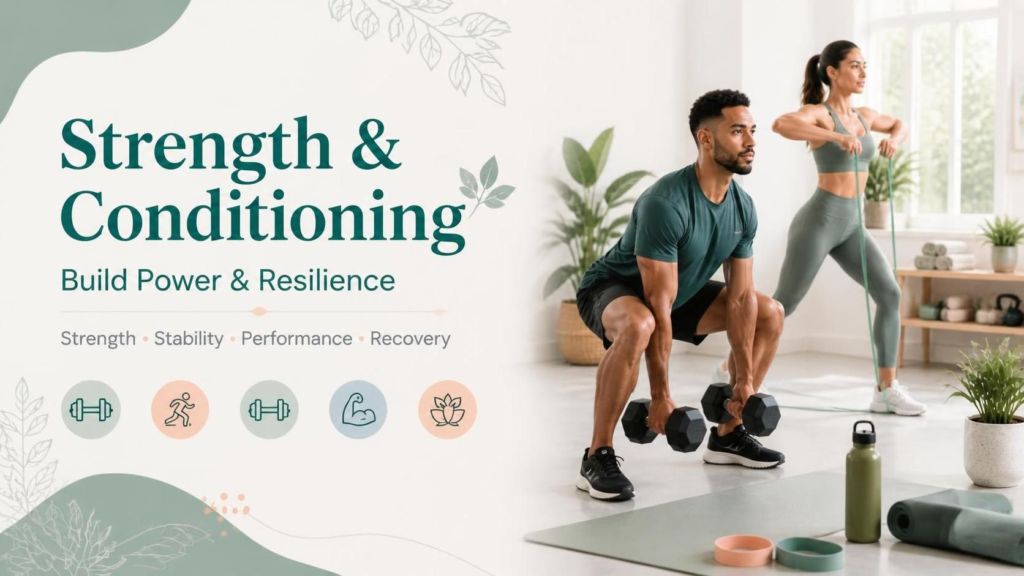
Strength & Conditioning is a key part of a balanced fitness routine. This section brings together practical resources for building muscular strength, improving physical performance, developing stability, and creating consistent resistance-training habits. Whether you are a beginner exercising at home or already following a structured routine, you can use these guides to choose exercises and workouts that match your goals.
Strength work can include bodyweight exercises, dumbbells, resistance bands, machines, and free weights. The right approach depends on your experience, available equipment, schedule, and training goals. Start with movements you can perform with good control, then gradually increase the challenge as your ability improves.
Strength & Conditioning for Beginners and Beyond
A well-planned strength routine can support muscular development, balance, stability, posture, and everyday movement. Beginners do not need complicated programs to get started. Consistent practice with manageable exercises can provide a foundation for progressing toward more demanding workouts.
- 10 Best Home Workout Plans for Beginners – Explore practical routines for getting started with regular exercise at home.
- Full Body Workout at Home – Learn how to train several major muscle groups in one practical session.
- Chest Workout at Home – Explore exercises for training the chest without needing a full gym setup.
- 7 Leg Exercises at Home for Beginners – Build a foundation for lower-body strength with accessible movements.
How to Progress Your Strength Training
Progress does not always mean lifting heavier weights. You can make a workout more challenging by gradually increasing resistance, repetitions, sets, range of motion, or exercise difficulty. Improving control and technique can also make a meaningful difference. Keep track of your workouts so you can recognize gradual improvements and avoid changing too many variables at once. If an exercise becomes easy with good form, consider a small increase in resistance or repetitions rather than making a sudden jump. This gradual approach can help you build consistency while giving your body time to adapt.
What Are the Benefits of Strength Training?
Regular resistance exercise can help develop stronger muscles and bones while supporting balance, stability, posture, and functional movement. It can also complement cardio and mobility work as part of a varied exercise routine. For beginners, focusing on controlled movement and consistent practice is often more useful than trying to perform advanced exercises too quickly.
Strength & Conditioning also benefits from a balanced approach to training and recovery. Giving your body enough time to recover between challenging sessions can help you maintain consistency and adapt gradually.
How Can Beginners Start Strength & Conditioning?
Begin with simple movements that match your current ability and gradually increase the challenge. A beginner routine might include exercises for the legs, chest, back, shoulders, and core. Pay attention to technique, use a manageable level of resistance, and allow enough recovery between demanding sessions.
Can You Build Strength at Home?
Yes. Effective home workouts can use bodyweight exercises, dumbbells, resistance bands, or other simple equipment. You can progressively increase repetitions, resistance, range of motion, or exercise difficulty as your strength improves. A consistent home routine can be a practical option when access to a gym is limited.
How Often Should You Do Strength Workouts?
Training frequency depends on your goals, experience, workout intensity, and recovery. Rather than training as often as possible, choose a sustainable schedule that gives your muscles time to recover. Consistency over weeks and months is more important than trying to maximize every individual session.
Explore More Fitness Resources
Strength is one part of a balanced exercise routine. If you also want to improve cardiovascular endurance, flexibility, mobility, or other aspects of physical fitness, return to the Fitness & Training main page and explore the other areas of the hub.
A consistent Strength & Conditioning routine can become a sustainable part of your weekly fitness plan when it is adapted to your goals, experience, and recovery needs.
“`