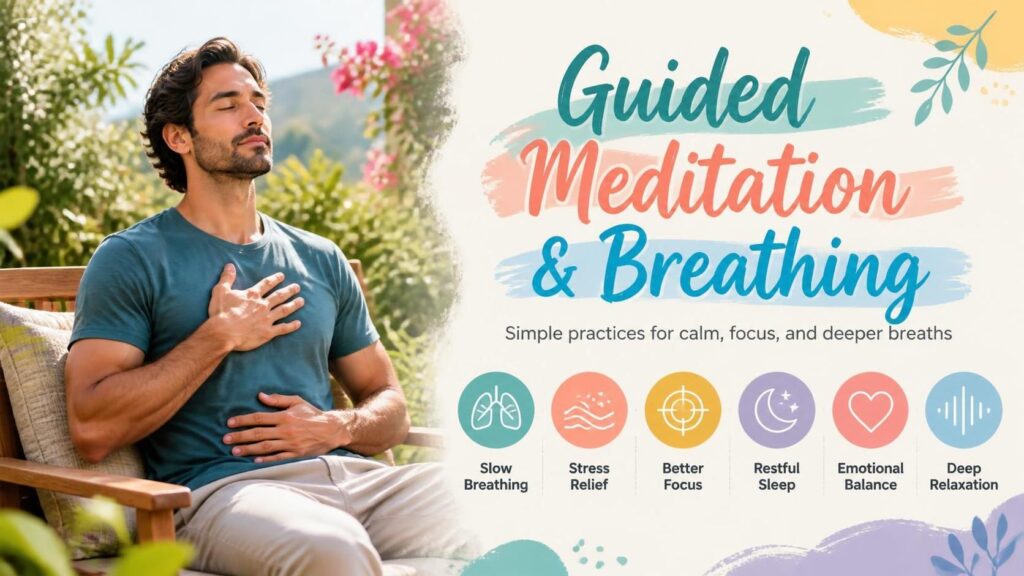
Guided Meditation & Breathing practices offer simple ways to develop mindfulness, create moments of calm, and become more aware of your thoughts, breathing, and physical sensations. Whether you are completely new to meditation or already have an established routine, guided practices can give you a clear structure to follow and make regular practice easier to maintain.
This guide explores the potential benefits of Guided Meditation & Breathing, popular meditation styles, practical breathwork techniques, ways to create a comfortable practice environment, and common questions beginners often have. For the broader topic, visit our Meditation & Mindfulness hub.
Guided practices can be especially useful when you are not sure where to begin. Instead of deciding what to focus on during every session, you can follow a structured meditation, breathing exercise, or verbal instruction and gradually become more comfortable practicing independently.
Key Benefits of Guided Meditation & Breathing
Regular meditation and intentional breathing can support relaxation, present-moment awareness, and focused attention. The experience varies from person to person, but consistent practice can help you develop useful skills for responding to everyday stress and becoming more aware of your mental and physical state.
- Greater focus and mental awareness: Meditation encourages you to notice when your attention wanders and gently bring it back to the present moment.
- Relaxation: Slow, comfortable breathing can become part of a calming routine or a short pause during a busy day.
- Improved body awareness: Body scan practices encourage you to notice physical sensations, tension, and areas of relaxation.
- Emotional awareness: Mindfulness creates an opportunity to observe thoughts and emotions before automatically reacting to them.
- Support for a consistent wellness routine: Short guided sessions can be easier to maintain when they are connected to an existing daily habit.
Popular Types of Guided Meditation
Different meditation practices use different points of focus. When choosing a guided meditation, consider your experience level, your reason for practicing, and the type of session you find comfortable enough to repeat regularly.
- Body Scan Meditation: Directs attention gradually through different areas of the body, helping you notice sensations, tension, and relaxation.
- Mindfulness Meditation: Focuses on present-moment awareness of the breath, body sensations, thoughts, or surrounding experiences without deliberately judging them.
- Loving-Kindness (Metta) Meditation: Uses phrases or intentions associated with kindness and compassion toward yourself and others.
- Visualization Meditation: Uses imagined scenes, sensations, or calming images as the focus of the practice.
If you want to explore mindfulness beyond a seated meditation session, our guide to Mindful Movement looks at how awareness can be combined with physical movement.
Breathwork Techniques for Relaxation and Energy
Breathing techniques can be practiced independently or incorporated into Guided Meditation & Breathing sessions. Different methods use different breathing patterns, so beginners should choose a comfortable approach rather than forcing deep or prolonged breaths.
- Diaphragmatic (Belly) Breathing: Encourages relaxed breathing in which the abdomen moves naturally as you inhale and exhale.
- Box Breathing: Uses equal phases of inhaling, holding, exhaling, and holding again. The timing can be adjusted to a comfortable pace.
- 4-7-8 Breathing: Uses a structured pattern with a longer exhalation. If the timing feels uncomfortable, use a gentler rhythm instead.
- Alternate Nostril Breathing: Alternates breathing through the nostrils and is traditionally used in some yoga and meditation practices.
For a closer look at breathing practices related to energy and alertness, explore our guide to Breathing Techniques to Increase Body Energy.
Creating the Right Environment for Guided Meditation & Breathing
You do not need a special room or expensive equipment to practice Guided Meditation & Breathing. A quiet and comfortable place can make it easier to maintain your attention and establish a routine. Put your phone on silent, choose a stable position, and reduce unnecessary distractions whenever possible.
- Choose a time when interruptions are less likely.
- Sit or lie in a position that allows you to remain comfortable and alert.
- Keep your practice space simple and free from unnecessary distractions.
- Use soft lighting or another calming element if it helps you settle into the practice.
- Start with a realistic session length instead of forcing yourself to meditate for a long period.
How Long Should Beginners Practice Guided Meditation?
There is no single required duration for meditation. Beginners can start with five to ten minutes and gradually increase the duration if longer sessions feel comfortable. A short practice that you can repeat consistently is often more practical than an ambitious routine that becomes difficult to maintain.
Can Breathing Exercises Help With Stress and Anxiety?
Slow, comfortable breathing can be included in a relaxation routine and may provide a useful pause during stressful moments. It should not be considered a substitute for professional care when someone is experiencing severe or persistent anxiety, panic symptoms, or another health concern. For additional resources, visit our Stress & Anxiety Relief hub.
Is It Better to Meditate in the Morning or Before Sleep?
Either can work. A morning meditation may help you begin the day with a period of focused attention, while an evening practice can become part of a calming bedtime routine. The most useful time is usually the one you can maintain consistently and comfortably.
If relaxation and restful sleep are your main goals, you can also explore our Sleep & Recovery hub for related resources.
How Can You Make Guided Meditation a Daily Habit?
Connecting meditation with an existing part of your day can make a new routine easier to remember. You might practice after waking up, during a midday break, after exercise, or as part of your evening wind-down. Start with a manageable duration, use the same place when convenient, and allow your routine to develop gradually.
Explore Guided Meditation & Breathing Further
Guided Meditation & Breathing is one part of a broader approach to mindfulness and everyday well-being. Continue to the Meditation & Mindfulness hub to explore the wider topic, or visit the related Stress & Anxiety Relief and Sleep & Recovery clusters.