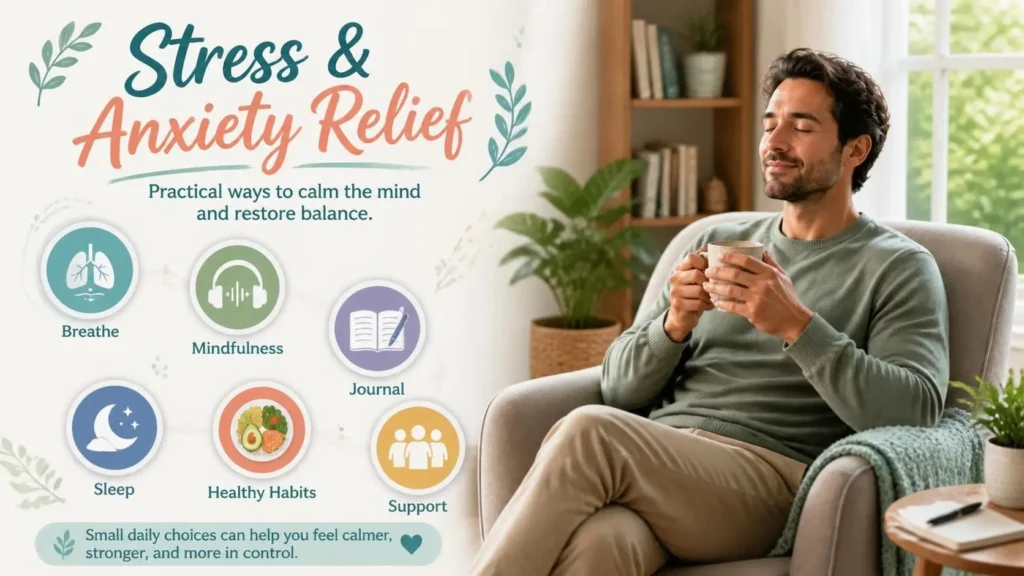
Stress and anxiety are common challenges that can affect how you feel, sleep, concentrate, and move through your day. Stress & Anxiety Relief can involve simple practices that help you slow down, become more aware of your thoughts and body, and build healthier daily routines. Explore our Meditation & Mindfulness pillar for more practices and resources.
Understanding Stress & Anxiety
Stress is the body’s natural response to challenges, demands, or situations that require action. Anxiety can involve persistent worry, fear, or uneasiness, sometimes even when there is no immediate threat. Although stress and anxiety are not the same, they can affect similar areas of everyday life.
Common experiences may include restlessness, irritability, difficulty concentrating, muscle tension, headaches, a faster heartbeat, changes in breathing, or trouble sleeping. When stress begins to affect your daily routine, relaxation practices and healthy lifestyle habits may be useful parts of a broader Stress & Anxiety Relief approach.
Mindfulness Practices for Stress Relief
Mindfulness involves paying attention to the present moment with greater awareness and without immediately reacting to every thought or sensation. Regular mindfulness practices may help you create a pause between stressful situations and your response to them.
Deep Breathing Exercises – Slow, comfortable breathing can be used as a simple relaxation practice. Explore our guide to Breathing Techniques to Increase Body Energy.
Progressive Muscle Relaxation – This technique involves gently tensing and relaxing different muscle groups, helping you become more aware of physical tension and release.
Guided Meditation – Short guided sessions can provide a structured way to focus your attention and create a calmer transition during a busy day. See our Guided Meditation & Breathing guide.
Journaling – Writing down thoughts, concerns, or daily experiences can help organize your thinking and create space for reflection.
Daily Habits That Support Stress & Anxiety Relief
Relaxation techniques work best as part of a balanced routine rather than as a single solution. Several everyday habits can support overall well-being and make it easier to manage periods of stress.
Regular Physical Activity: Moving your body can support mood, energy, and overall well-being. Explore our Fitness & Training resources for home-friendly workout ideas.
Balanced Nutrition: Regular, balanced meals and adequate hydration can support everyday energy and well-being. Our Weight Loss & Nutrition section offers practical guidance.
Consistent Sleep: A regular sleep routine gives your body and mind time to recover. Visit Sleep & Recovery for more sleep and recovery practices.
Time Management: Breaking large tasks into smaller steps and creating realistic priorities can help reduce feelings of being overwhelmed.
Social Connection: Spending time with supportive people and maintaining meaningful connections can be an important part of emotional well-being.
Simple Stress & Anxiety Relief Techniques to Try
When you feel tense or overwhelmed, start with one simple practice instead of trying to change everything at once. You might spend a few minutes focusing on slow breathing, take a short walk, practice guided meditation, stretch gently, or write down what is currently on your mind.
Creating a short daily routine can also make these practices easier to maintain. For example, you could begin your morning with a few minutes of mindful breathing or end your evening with a quiet relaxation practice.
Frequently Asked Questions About Stress & Anxiety Relief
Can breathing exercises help with stress and anxiety?
Slow, controlled breathing can be a useful relaxation technique when you are experiencing everyday stress. It gives you a simple way to pause, focus your attention, and create a calmer breathing pattern. For a practical introduction, see our breathing techniques guide.
How can mindfulness help with stress?
Mindfulness encourages you to notice thoughts, feelings, and physical sensations as they occur rather than automatically reacting to them. Practicing regularly may help you develop greater awareness of your responses to everyday situations.
What is a simple way to relax when feeling stressed?
Choose one quiet activity that feels comfortable and manageable. You could try several minutes of slow breathing, a short guided meditation, gentle stretching, or a brief walk. The goal is to create a small pause and give yourself time to settle before returning to your next task.
Can better sleep support stress management?
Yes. Consistent sleep is an important part of overall well-being and recovery. Creating a regular bedtime routine and making time for relaxation before sleep may support healthier sleep habits. Explore Sleep & Recovery for related guidance.
Explore More Meditation & Mindfulness Practices
Stress & Anxiety Relief is one part of a broader approach to meditation, mindfulness, relaxation, and everyday wellness. Continue exploring our Meditation & Mindfulness pillar, or discover Guided Meditation & Breathing and Sleep & Recovery for more practical resources.