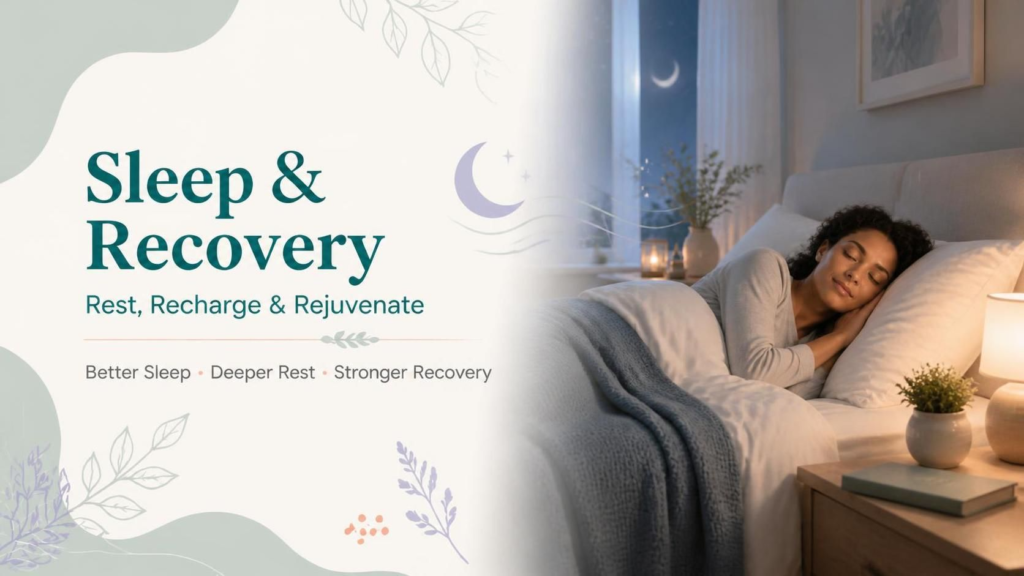
Sleep & Recovery are essential parts of everyday wellness. Quality sleep gives the body time to rest and supports memory, mood, immune function, and physical recovery. A consistent routine can also make it easier to transition from a busy day into restful sleep. Explore our Meditation & Mindfulness pillar for more practices that support relaxation and well-being.
Why Is Sleep & Recovery Important for Health?
Sleep affects many aspects of physical and mental well-being. During sleep, the body carries out important processes involved in recovery, while the brain processes information and supports memory and learning.
Supports memory and brain function: Sleep plays an important role in learning, memory, attention, and everyday cognitive function.
Supports physical recovery: Rest gives the body time to recover from daily activity and exercise. Adequate sleep is particularly important when you are following a regular fitness routine.
Supports immune function: Healthy sleep is associated with normal immune system function and overall health.
Supports mood and stress management: Poor sleep can affect mood and make everyday stress more difficult to manage. For practical relaxation strategies, explore our Stress & Anxiety Relief guide.
Supports healthy appetite and metabolism: Sleep is also connected with appetite regulation and metabolic health. Visit our Weight Loss & Nutrition section for related guidance.
For an accessible overview of why sleep matters, see the Sleep Foundation’s guide to why we need sleep.
Meditation and Relaxation for Better Sleep
Relaxation practices can be useful when a busy mind or daily stress makes it difficult to settle down at night. Sleep & Recovery can benefit from a calming bedtime routine that includes meditation and mindful breathing.
Mindfulness Meditation: Gently bring your attention to your breathing, body sensations, or the present moment instead of continuing to focus on the day’s worries. Learn more in our Meditation & Mindfulness guide.
Body Scan Meditation: Slowly move your attention through different areas of the body, noticing sensations and consciously relaxing areas that feel tense.
Guided Meditation: A short guided practice can provide structure when you are trying to create a relaxing transition into bedtime. Explore our Guided Meditation & Breathing resources.
Gentle Visualization: Imagining a peaceful, familiar setting can give your attention something calm to focus on before sleep.
Evening Wind-Down Practices for Nighttime Recovery
A consistent wind-down routine is an important part of Sleep & Recovery. It can help create a clear transition between daytime activities and bedtime.
Reduce stimulating screen use: Give yourself some quiet time before bed and reduce activities that keep your mind highly engaged.
Create a comfortable sleep environment: Keep the bedroom comfortable, quiet, and dark when possible. A relaxing environment can make it easier to settle into your normal sleep routine.
Keep a consistent sleep schedule: Going to bed and waking up at approximately the same times each day can support a regular sleep-wake rhythm.
Be mindful of caffeine and heavy meals: Caffeine later in the day can interfere with sleep for some people, while heavy meals close to bedtime may feel uncomfortable.
Choose a calming activity: Reading, gentle stretching, quiet breathing, or a warm bath can become simple signals that your day is winding down.
Sleep & Recovery Practices for Body and Mind
Recovery is not limited to nighttime sleep. Your body also benefits from sensible activity levels, hydration, nutrition, and periods of rest throughout the day.
Active Recovery: Gentle walking, light stretching, and mobility work can provide movement on easier training days without adding the same demands as a hard workout. Explore Flexibility & Mobility for practical ideas.
Hydration and Balanced Nutrition: Drinking enough fluids and eating balanced meals help support normal body function and everyday energy. Visit our Weight Loss & Nutrition section for more guidance.
Relaxation Breathing: Slow, comfortable breathing can be incorporated into a relaxation routine, especially when you want to create a quiet transition between activity and rest. See our Breathing Techniques to Increase Body Energy guide.
Rest Between Workouts: If you exercise regularly, allowing enough time between demanding sessions can help you manage training load and support recovery. Explore our Fitness & Training hub for more workout guidance.
Frequently Asked Questions About Sleep & Recovery
How many hours of sleep do adults need?
Sleep needs vary between individuals, but most adults generally need at least seven hours of sleep per night. Sleep quality and consistency also matter, not just the number of hours spent in bed.
What is the difference between active and passive recovery?
Passive recovery involves resting with little or no physical activity, such as sleeping or taking a quiet break. Active recovery involves low-intensity movement such as easy walking, gentle stretching, or mobility exercises. The appropriate approach depends on your activity level and how your body feels.
Can meditation replace lost sleep?
No. Meditation can be a useful relaxation practice, but it should not be considered a replacement for adequate sleep. If you are regularly sleeping too little, improving your sleep routine and addressing factors that interfere with sleep are more important than using meditation as a substitute for rest.
What can I do when I cannot fall asleep?
Start by keeping the environment quiet and comfortable and avoid activities that make you more alert. A short breathing or relaxation practice, quiet reading, or another low-stimulation activity may help you wind down. If difficulty sleeping is persistent or significantly affects your daily life, consider discussing it with a qualified healthcare professional.
How can I build a better nighttime routine?
Begin with a few habits that you can repeat consistently. Choose a regular bedtime, reduce stimulating activities before sleep, prepare a comfortable bedroom, and include one calming activity such as gentle stretching, mindful breathing, or reading.
Explore More Sleep & Recovery Resources
Sleep & Recovery are part of a broader approach to wellness that includes mindfulness, relaxation, movement, nutrition, and healthy daily routines. Continue exploring our Meditation & Mindfulness pillar, or visit Stress & Anxiety Relief and Guided Meditation & Breathing for related practices.
You can also explore practical movement and recovery resources such as stretches to relieve back pain and our Flexibility & Mobility hub.