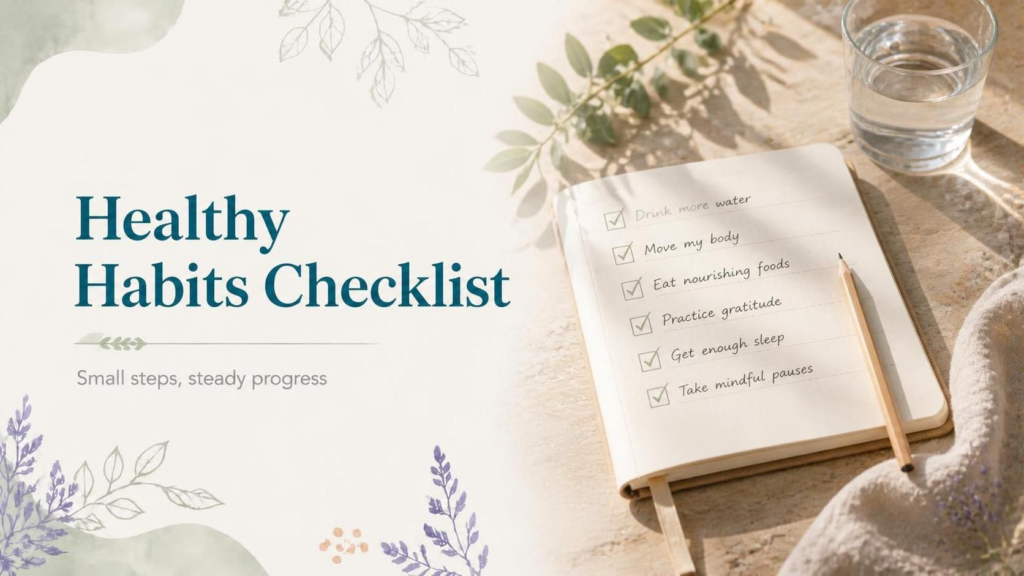
Welcome to Day 6 of the 7-Day Wellness Reset! Over the past five days, you have explored your wellness starting point, sleep routine, everyday nutrition, physical activity, and mindful pauses. Today, you will learn how to make healthy habits easier to repeat by keeping your actions simple, connecting them to existing routines, and preparing for everyday obstacles.
Starting a new habit can feel exciting, but continuing it when life gets busy can be more challenging. Work, family responsibilities, changing schedules, and low-energy days can interrupt even the best intentions. The solution is not necessarily more discipline or a stricter plan. Sometimes, the most useful change is to make the habit smaller, more convenient, and easier to remember.
Table of Contents
Why Healthy Habits Can Be Difficult to Maintain
Many people begin with ambitious goals. They may decide to exercise every day, completely change their eating routine, or follow a detailed morning schedule. These goals can be difficult to maintain when they require too much time, effort, or preparation.
Healthy habits become more practical when they fit your actual circumstances. A short walk may be easier to repeat than a demanding workout. Preparing one meal in advance may be more realistic than planning every meal for a week. Taking one mindful pause may fit your schedule better than following a long daily routine.
The purpose of this lesson is to help you create habits that work with your life rather than expecting your life to revolve around a perfect routine.
Step 1: Start With One Small Action
One way to make healthy habits easier to repeat is to reduce the amount of effort needed to get started. Instead of focusing on a large outcome, choose a small action you can complete in your current circumstances.
For example:
- Sleep: Begin your wind-down routine at a consistent time on selected evenings.
- Nutrition: Prepare one simple ingredient ahead of a busy day.
- Movement: Take a short walk or choose another suitable activity.
- Mindfulness: Pause for one minute after finishing a regular task.
- Hydration: Keep drinking water accessible when appropriate for your needs.
Choose an action that feels manageable even on an ordinary, busy day. You can increase the duration or complexity later if the habit becomes comfortable and continues to suit you.
The CDC’s guide to building a healthy habit also recommends making a clear plan and tracking your progress.Step 2: Connect a New Habit to an Existing Routine
A new action may be easier to remember when you connect it to something you already do. This approach is sometimes called habit stacking. The idea is simple: use a familiar activity as a reminder for a new one.
Here are a few examples:
- After brushing your teeth in the morning, take a moment to review your priorities for the day.
- After breakfast, prepare the water bottle or other items you need for your day.
- After finishing a work session, stand up or take a short movement break if practical.
- After preparing dinner, set aside a few minutes to organize an ingredient for tomorrow.
- Before beginning your evening routine, write down one thing you want to remember for the next day.
The existing activity acts as a cue, while the new habit becomes the action that follows. Choose a connection that makes sense in your daily schedule rather than adding several new habits at once.
Step 3: Make Your Environment Support Your Habits
Your surroundings can make some actions easier to remember and others easier to overlook. Small changes to your environment may reduce the effort required to follow your plan.
Consider these practical adjustments:
- Prepare what you need: Put comfortable walking shoes near the place where you usually get ready.
- Keep useful items visible: Place your planner or a reminder somewhere you will naturally see it.
- Reduce unnecessary steps: Prepare ingredients or organize supplies before you need them.
- Limit distractions: Put your phone aside during a short break if notifications interrupt your attention.
- Make the desired action convenient: Choose a suitable location and time so you do not need to make several decisions before starting.
You do not need to reorganize your entire home or buy special equipment. Begin with one small adjustment that makes your chosen habit easier to carry out.
Step 4: Plan for Obstacles Before They Happen
Even a realistic routine can be interrupted. You may have an unexpected appointment, a busy workday, bad weather, or less time than you expected. Planning for these situations can help you adapt without abandoning your goal completely.
For each habit, ask yourself three questions:
- What might make this action difficult?
- What is a simpler alternative I could use?
- When could I try again if I miss my planned time?
For example, if you planned to walk outside but the weather is unsuitable, you might choose a safe indoor activity that fits your abilities. If you cannot prepare a full meal, you could select a simpler meal using ingredients you already have.
Your backup plan does not have to be identical to your original plan. Its purpose is to give you a realistic alternative when circumstances change.
Step 5: Use Reminders Without Overcomplicating Your Day
Reminders can help when a new action has not yet become part of your usual routine. However, too many alerts can become distracting or easy to ignore. Choose a reminder method that works for you.
You might try:
- Writing your habit in a paper planner.
- Adding one useful reminder to your phone calendar.
- Using a sticky note in a place you regularly see.
- Connecting the action to an existing daily activity.
- Checking off the habit after you complete it.
Keep your tracking simple. A mark on a calendar or a short note can be enough to help you notice your efforts. Tracking is a tool for learning, not a reason to criticize yourself when you miss a day.
Step 6: Review Your Progress With Curiosity
Instead of asking only whether you succeeded or failed, use your experience to understand what makes a habit easier or harder to maintain.
At the end of the day or week, consider these questions:
- Which habit was easiest to complete?
- What helped me remember it?
- What made the habit difficult on busy days?
- Was my original plan realistic for my schedule?
- Would a smaller action or a different time work better?
If you repeatedly struggle with a habit, treat that as useful information. Perhaps the action needs to be smaller, the reminder needs to change, or the timing does not suit your routine. Adjusting your approach is a practical part of building habits.
For more guidance, read the National Institute of Diabetes and Digestive and Kidney Diseases’ resource on changing your habits for better health, which explains that developing new routines is a process and that obstacles are common.Step 7: Focus on Consistency, Not Perfection
Building a routine does not mean completing every action perfectly every day. Schedules change, responsibilities arise, and some days are more demanding than others. One missed action does not erase the effort you have already made.
If you miss a planned habit, return to it when practical. You do not need to compensate by doing extra activity, skipping meals, or following an unnecessarily strict routine. Simply continue with a suitable next step.
It can also help to distinguish between a habit you genuinely want to maintain and one you added because you felt you should. Choose actions that support your needs and circumstances, rather than filling your schedule with goals that create more pressure than value.
Your Day 6 Healthy Habits Check-In
Use the prompts below to turn the lesson into a practical plan. You can write your answers in your wellness notes or personal planner.
- One habit I want to make easier: ____________________
- The smallest useful version of this habit: ____________________
- An existing routine I can connect it to: ____________________
- One change that would make it easier to remember: ____________________
- A likely obstacle: ____________________
- My backup plan: ____________________
Today’s Small Action
Today, choose one healthy habit you would like to repeat more consistently. Make it smaller if necessary, connect it to an existing routine, and decide how you will remember it.
For example, instead of saying, “I will build a better evening routine,” try, “After I finish dinner, I will prepare one thing I need for tomorrow.” The second statement identifies a clear action and a familiar reminder.
Complete your chosen action once today. Then consider whether it was practical and what might help you repeat it. You are not trying to redesign your entire life in one day. You are creating a simple system that supports the habits you want to keep.
What Comes Next?
Tomorrow is Day 7: Create Your Personal 30-Day Wellness Plan. You will bring together what you have learned during the seven-day reset and choose a small number of realistic habits to continue over the next month.
You can also revisit the free wellness guides for additional educational resources. Keep your notes from the previous lessons so you can use them when creating your personal plan.
A Friendly Reminder
Healthy habits do not need to be complicated to be meaningful. Start with small actions, make them convenient, and allow your routine to adapt as your circumstances change. Your plan should support your everyday life, not become another source of pressure.
This lesson provides general educational information and is not personalized medical advice. Adapt activities and routines to your needs, and consult a qualified healthcare professional if you need guidance related to a medical condition or specific health requirements.