4 Breathing Techniques to Increase Body Energy
Discover effective breathing techniques to naturally increase your body energy. Learn simple exercises to boost vitality and feel refreshed every day.
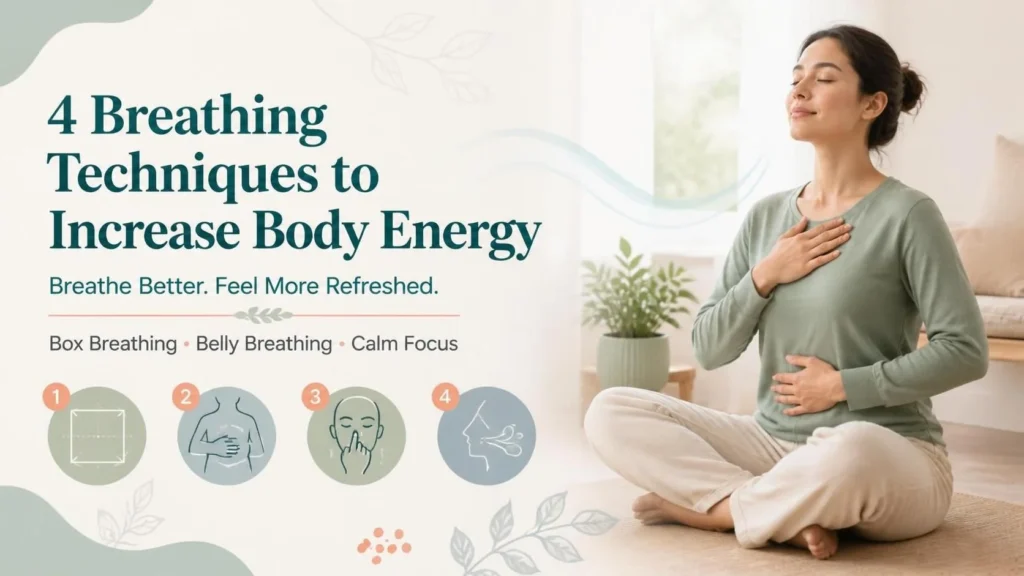
Feeling tired, mentally drained, or unable to focus does not always mean you need another cup of coffee. Sometimes, the way you breathe can influence how tense, calm, or alert you feel.
Breathing is automatic, but you can also use it deliberately. Simple breathing techniques can help slow a racing breath, reduce physical tension, support relaxation, and create a quick mental reset when stress is making you feel depleted.
In this guide, we’ll look at four practical breathing techniques that you can use at home, at work, or during a short break. These techniques are not a replacement for sleep, nutritious food, physical activity, or medical care, but they can be a useful part of a healthy energy routine.
Table of Contents
The Connection Between Breathing, Stress, and Energy
Breathing and the nervous system are closely connected. When you are stressed, your breathing may become faster, shallower, or more chest-focused. Deliberately slowing and controlling your breathing can help shift your body toward a more relaxed state.
Harvard Health describes controlled breathing as one way to help calm the body’s stress response. Slow, deep breathing can also be incorporated into relaxation practices designed to reduce tension and promote a calmer state. Harvard Health explains how breath control can help regulate the stress response.
That does not mean breathing exercises magically create energy or dramatically increase oxygen levels in a healthy person’s bloodstream. Instead, their value may come from helping you relax, regulate your breathing, reduce unnecessary tension, and feel more focused or refreshed.
If stress is one reason you feel mentally or physically drained, breathing exercises can therefore complement other habits that support your energy. For a broader look at everyday strategies, see our guide to daily healthy habits that can support your body’s energy.
What Can Breathing Techniques Actually Do for Your Energy?
It is useful to set realistic expectations before trying any breathing exercise. Breathing techniques are not a substitute for adequate sleep, balanced nutrition, hydration, or regular movement.
What they can provide is a simple way to change your breathing pattern and create a short reset during a stressful or demanding day.
- Reduce tension: Slower, controlled breathing can encourage a relaxation response.
- Help calm the nervous system: Controlled breathing is commonly used as part of relaxation and stress-management practices.
- Improve body awareness: Paying attention to your breath can help you notice when you are breathing too quickly or holding unnecessary tension.
- Support focus: A brief breathing exercise can give you a structured pause before returning to a task.
- Make breathing more efficient: Diaphragmatic breathing teaches you to engage the diaphragm rather than relying excessively on the upper chest.
For people looking for a broader approach to energy, breathing works best as one small piece of the picture. Nutrition, movement, sleep, and daily routines all matter too. You can explore our complete guide to boosting body energy for a wider range of practical strategies.
4 Breathing Techniques to Increase Body Energy
The following four breathing techniques have different purposes. Some are especially useful when you feel stressed, while others can help you become more aware of your breathing pattern or create a calm transition between activities.
1. Box Breathing (4-4-4-4)
Box breathing, also called tactical breathing, is a simple four-part breathing pattern. You inhale, hold, exhale, and hold for equal counts.
Harvard Health describes box breathing as a practical technique that can be used to help calm the body’s stress response. Read Harvard Health’s explanation of tactical or box breathing.
How to do box breathing
- Sit comfortably and relax your shoulders.
- Inhale slowly through your nose for 4 seconds.
- Hold your breath gently for 4 seconds.
- Exhale slowly for 4 seconds.
- Hold for another 4 seconds.
- Repeat for several comfortable cycles.
You do not need to force each count. If holding your breath for four seconds feels uncomfortable, shorten the count or choose a gentler breathing pattern.
Best time to use it: Before a demanding task, during a stressful moment, or when you need a short mental reset.
2. Diaphragmatic Breathing
Diaphragmatic breathing, also called belly breathing or abdominal breathing, focuses on using the diaphragm effectively. Instead of deliberately lifting the chest, you allow the abdomen to expand naturally as you inhale.
According to Cleveland Clinic, diaphragmatic breathing can help make breathing more efficient and may support relaxation while reducing the work required to breathe. See Cleveland Clinic’s guide to diaphragmatic breathing.
How to practice diaphragmatic breathing
- Sit comfortably or lie down with your shoulders relaxed.
- Place one hand on your upper chest and the other just below your rib cage.
- Inhale slowly through your nose.
- Allow your abdomen to expand as your diaphragm moves.
- Try to keep the hand on your upper chest relatively still.
- Exhale slowly and comfortably, allowing your abdomen to move inward.
- Repeat for several slow breaths.
At first, the movement may feel unfamiliar. With regular practice, it can become easier to recognize and control your breathing pattern.
Best time to use it: When you feel tense, before meditation, after a stressful situation, or as part of a short relaxation routine.
3. Alternate Nostril Breathing
Alternate nostril breathing is a traditional breathing practice in which you gently alternate the nostril used for inhalation and exhalation. It is often used as a calming, focused breathing exercise.
How to practice alternate nostril breathing
- Sit comfortably with your spine relaxed but upright.
- Close your right nostril gently with your thumb.
- Inhale slowly through your left nostril.
- Close your left nostril and release the right.
- Exhale slowly through your right nostril.
- Inhale through the right nostril.
- Close the right nostril and exhale through the left.
- Continue alternating sides at a comfortable pace.
Keep the breathing gentle rather than deep or forceful. The goal is controlled, comfortable breathing—not taking in as much air as possible.
Best time to use it: During a quiet break, before meditation, or when you want to slow down and refocus.
4. 4-7-8 Breathing
4-7-8 breathing uses a longer exhalation and a brief breath hold. It is commonly used as a relaxation technique and may be particularly useful when you want to wind down rather than become more stimulated.
How to practice 4-7-8 breathing
- Get into a comfortable seated or lying position.
- Inhale gently through your nose for 4 seconds.
- Hold your breath for 7 seconds, if comfortable.
- Exhale slowly for 8 seconds.
- Repeat for a few cycles without forcing the breath.
The longer exhalation makes this technique different from more energizing-feeling breathing patterns. If the breath hold feels uncomfortable, dizzying, or stressful, stop and return to normal breathing.
Best time to use it: In the evening, before sleep, or whenever your main goal is relaxation rather than stimulation.
Which Breathing Technique Should You Choose?
You do not need to practice all four techniques every day. Choose one based on what you need at that moment.
| Technique | Best for | Simple starting point |
|---|---|---|
| Box breathing | Stress and mental reset | 4-4-4-4 for a few cycles |
| Diaphragmatic breathing | Relaxation and breathing awareness | 5 slow breaths |
| Alternate nostril breathing | Calm focus | Several gentle alternating cycles |
| 4-7-8 breathing | Winding down and relaxation | A few comfortable cycles |
If you feel mentally overloaded, box breathing may give you a structured pause. If your breathing feels tense or chest-focused, diaphragmatic breathing is a useful skill to practice. If you want a quiet transition into meditation, alternate nostril breathing may fit naturally into your routine. And if your goal is to wind down at night, 4-7-8 breathing may be more appropriate than a stimulating exercise.
A 2-Minute Breathing Reset for a Busy Day
You do not need a long meditation session to practice controlled breathing. A short reset can fit between meetings, before studying, after a difficult conversation, or when you notice yourself becoming tense.
Try this simple routine
- Sit comfortably and release tension from your shoulders.
- Take two normal breaths without changing anything.
- Begin breathing slowly through your nose.
- Allow your abdomen to move naturally as you inhale.
- Make each exhalation slow and comfortable.
- Continue for about two minutes.
- Before returning to your task, notice whether your breathing, shoulders, and attention feel different.
This is intentionally simple. You are not trying to force a particular sensation or create an instant burst of energy. The purpose is to pause, regulate your breathing, and give your mind a short break.
If you are looking for other natural ways to support your energy throughout the day, you may also enjoy our guide to foods that increase energy and stamina and our article on energy-boosting breakfast foods.
Breathing Techniques vs. Other Energy-Boosting Habits
Breathing exercises are most useful when they complement—not replace—the foundations of healthy energy.
If you regularly feel tired, consider the bigger picture:
- Sleep: Give your body enough consistent sleep and pay attention to sleep quality.
- Nutrition: Build meals around nutritious foods and adequate protein, fiber, and fluids.
- Movement: Regular physical activity can support overall fitness and energy.
- Hydration: Drink enough fluids throughout the day based on your individual needs.
- Stress management: Use breathing, relaxation, mindfulness, or other techniques that help you manage daily stress.
For an exercise-focused approach, see our 10 best home workout plans for beginners. For nutrition ideas before exercise, you can also explore our guide to pre-workout snacks for energy and endurance.
When Should You Practice Breathing Exercises?
The best time depends on your goal. Because these techniques require little or no equipment, you can incorporate them into several parts of your day.
- In the morning: Use a few slow breaths to begin the day calmly.
- Before work or studying: Take a short breathing break before starting a demanding task.
- During stressful moments: Use box breathing or gentle diaphragmatic breathing to create a pause.
- After exercise: Allow your breathing to gradually return to a comfortable rhythm.
- Before meditation: Use controlled breathing as a transition into a more mindful state.
- In the evening: Choose a gentle, relaxing breathing practice rather than trying to force yourself to feel energized.
Consistency matters more than duration. A few comfortable minutes practiced regularly can be more realistic than an occasional long session.
Safety Tips for Breathing Techniques
Breathing exercises should feel controlled and comfortable. They should not make you feel as though you are struggling for air.
- Stop the exercise if you become dizzy, faint, unusually short of breath, or uncomfortable.
- Do not force deep breaths or prolonged breath holds.
- Practice seated or lying down if you are new to breathwork.
- Do not practice breath-holding exercises while driving, swimming, or doing anything where dizziness could create a safety risk.
- If you have a respiratory, cardiovascular, or other medical condition that affects your breathing, ask a qualified healthcare professional whether a particular breathing exercise is appropriate for you.
Breathing exercises can be useful wellness tools, but they are not a treatment for unexplained or persistent fatigue, breathing problems, chest pain, fainting, or other concerning symptoms. If you experience persistent symptoms, speak with a healthcare professional.
Frequently Asked Questions About Breathing Techniques
Can breathing techniques really increase body energy?
Breathing techniques do not create energy in the same way that food, sleep, or physical activity support the body’s energy needs. Their potential benefit is more indirect. Controlled breathing can help reduce tension, support relaxation, and provide a mental reset, which may leave you feeling calmer, clearer, or more refreshed.
What is the best breathing technique for quick energy?
There is no single breathing technique that is proven to work as an instant energy booster for everyone. If stress or mental overload is contributing to how tired you feel, a few minutes of slow, controlled breathing may help you feel more settled and focused. Diaphragmatic breathing is a practical place to start.
Can breathing exercises replace coffee?
No. Breathing exercises and caffeine work in very different ways. A breathing exercise can provide a short pause and may help you feel calmer or more focused, but it should not be viewed as a direct substitute for caffeine’s stimulant effects.
How long should I practice breathing exercises?
You can start with just two to five minutes. The important point is to breathe comfortably rather than forcing yourself to practice for a specific length of time. As you become familiar with the technique, you can adjust the duration according to your comfort and goals.
Which breathing technique is best before sleep?
A relaxing technique such as gentle diaphragmatic breathing or 4-7-8 breathing may be more appropriate before sleep than a technique designed around alertness or intense breathwork. If a breath hold makes you uncomfortable, skip it and use slow, comfortable breathing instead.
Why do I feel dizzy when doing breathing exercises?
Dizziness can occur when you breathe too deeply or too quickly, or when you hold your breath longer than is comfortable. Stop the exercise, return to normal breathing, and give yourself time to recover. If dizziness happens repeatedly or occurs outside breathing exercises, discuss it with a healthcare professional.
Final Thoughts
Breathing is one of the simplest things you can work with when you need a short reset. The goal is not to force more oxygen into your body or create an instant burst of vitality. Instead, these breathing techniques can help you slow down, release unnecessary tension, become more aware of your breathing, and create a calmer transition between activities.
Start with the technique that matches your goal. Try box breathing when you need a structured pause, diaphragmatic breathing when you want to practice more relaxed breathing, alternate nostril breathing for a quiet focus exercise, or 4-7-8 breathing when your priority is winding down.
And remember: breathing is only one part of the bigger energy picture. Combine it with nutritious food, regular movement, adequate sleep, hydration, and healthy daily habits for a more complete approach to feeling your best.
For more practical strategies, continue with our complete guide to boosting your body energy or explore our collection of mind-body balance practices.
Wellness Advice Hub provides general wellness and educational information. This article is not intended to diagnose, treat, or prevent any medical condition.
About The Author