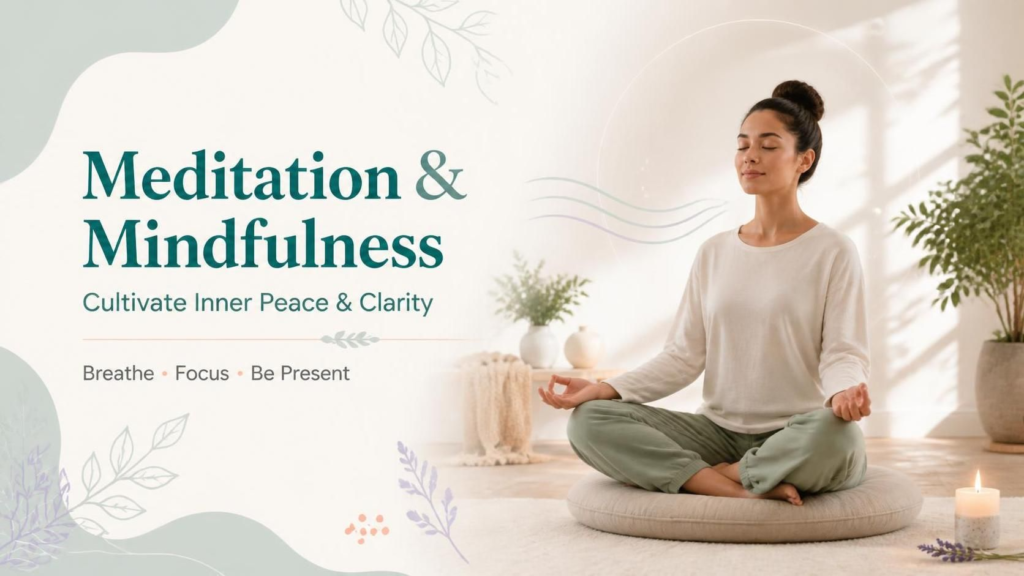
Meditation & Mindfulness practices can help you develop greater awareness, improve focus, and create moments of calm in your daily routine. Meditation is a structured practice that intentionally directs attention, while mindfulness involves paying attention to the present moment with greater awareness and less automatic reaction. Together, they can become practical tools for supporting mental well-being and everyday balance.
Whether you are completely new to meditation or already have an established practice, you can start with simple techniques and gradually develop a routine that fits your lifestyle. This section brings together practical resources on meditation, mindful movement, breathing, relaxation, and everyday mindfulness.
Meditation for Beginners
Starting meditation does not require special equipment or long sessions. Beginners can begin with just a few minutes in a comfortable position and focus their attention on the breath, bodily sensations, or a guided instruction. When the mind wanders, simply notice it and gently return your attention to the chosen focus.
- Start small: Begin with five to ten minutes and build gradually if longer sessions feel comfortable.
- Choose a comfortable position: You can sit on a chair, cushion, or another stable surface that allows you to remain relaxed and alert.
- Expect distractions: Wandering thoughts are a normal part of meditation rather than a sign that you are doing it incorrectly.
- Practice consistently: A short routine that you can maintain is more practical than occasional long sessions.
Breathing Techniques for Relaxation and Energy
Breathing exercises can be incorporated into meditation, relaxation routines, or short breaks during the day. Slow, controlled breathing can help create a moment of calm, while other breathing practices may be used to increase alertness and focus.
For a more detailed look at energy-focused breathwork, explore our guide to Breathing Techniques to Increase Body Energy.
Mindfulness in Everyday Life
Mindfulness does not have to be limited to a meditation session. You can practice it while walking, eating, working, studying, exercising, or talking with other people. The basic idea is to bring your attention to what you are doing instead of moving through the activity entirely on autopilot.
Another practical approach is mindful movement, which combines physical movement with greater awareness of breathing, body sensations, posture, and the way you move.
Mindfulness for Stress and Mental Well-Being
Mindfulness can provide a simple way to pause and observe thoughts, emotions, and physical sensations without immediately reacting to them. This does not mean trying to eliminate difficult thoughts or emotions. Instead, the practice encourages greater awareness of what is happening in the present moment.
- Use a short breathing exercise when you need a mental pause.
- Pay attention to physical sensations while walking or stretching.
- Notice your thoughts without automatically following every thought.
- Bring your attention back to the current activity when you notice your mind drifting.
Daily Habits That Support Mindfulness
Meditation can become easier to maintain when it is connected to other healthy daily habits. Consistent sleep routines, regular movement, nourishing meals, time away from excessive distractions, and intentional breaks can all contribute to a more balanced daily routine.
For practical ideas that can be incorporated into everyday life, explore our guide to Top Daily Healthy Habits.
Meditation, Relaxation, and Sleep
Meditation & Mindfulness practices can also be included in an evening routine. Gentle breathing, a body-scan practice, or a few quiet minutes of mindful attention may help create a transition between the activities of the day and bedtime. The goal is not to force sleep, but to create conditions that encourage relaxation and reduce unnecessary stimulation before bed.
Frequently Asked Questions About Meditation & Mindfulness
What is the difference between meditation & mindfulness?
Meditation is usually a structured practice in which you intentionally direct your attention, while mindfulness is a broader quality of present-moment awareness that can be practiced during everyday activities.
How long should beginners meditate?
There is no single required duration. Starting with five to ten minutes can make the practice easier to establish, and you can gradually increase the duration if it feels comfortable.
Can I practice mindfulness without sitting down to meditate?
Yes. Mindfulness can be practiced while walking, eating, working, exercising, or performing other everyday activities by deliberately bringing attention to the present experience.
Can breathing exercises be part of meditation?
Yes. Paying attention to the breath is one of the simplest ways to develop focused awareness during meditation, and specific breathing techniques can also be practiced separately.
Explore More Wellness Resources
Meditation & Mindfulness is one part of a broader approach to physical and mental well-being. Regular Meditation & Mindfulness practice can complement movement, healthy routines, and other approaches to everyday wellness. Explore the Fitness & Training hub for movement and exercise resources, or continue exploring Wellness Advice Hub for practical guides that support a balanced lifestyle.