10 Best Home Workout Plans for Beginners (No Equipment Needed)
Discover the best beginner-friendly home workout plans for beginners to build strength, lose fat, and stay consistent — no equipment needed.
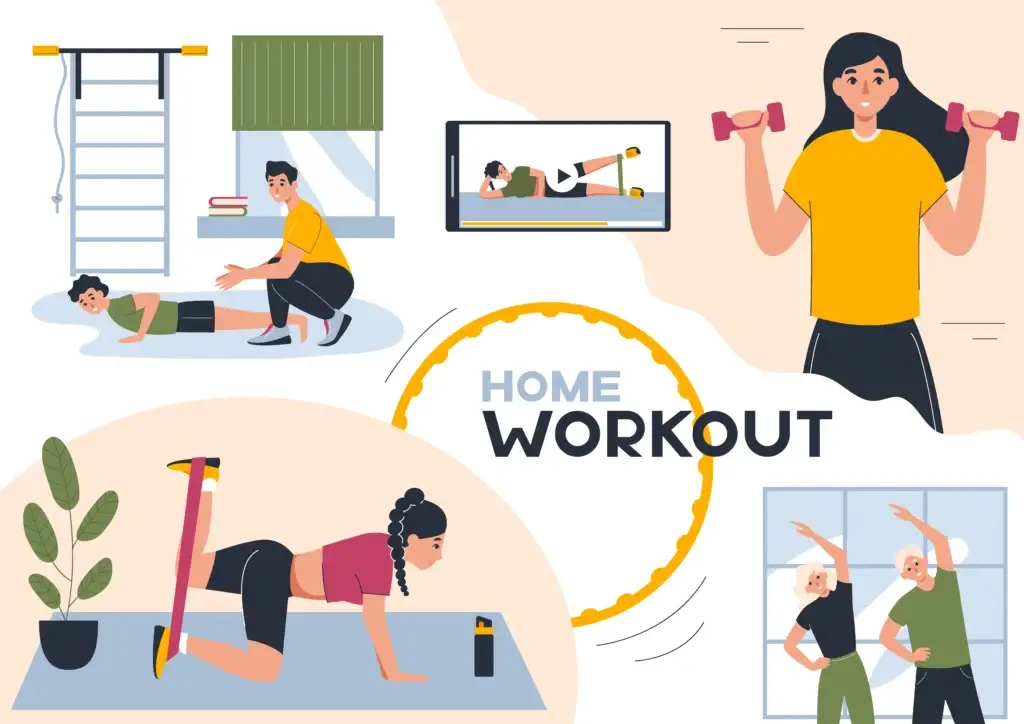
Starting a workout routine at home can feel much easier when you have a simple plan to follow. You do not need a gym membership, expensive equipment, or long workouts to begin moving more consistently.
The best home workout plans for beginners are realistic, easy to understand, and flexible enough to fit into everyday life. Whether your goal is to become more active, build basic strength, improve mobility, or support healthy weight management, starting small can help you build a routine you can actually maintain.
In this guide, you will find 10 beginner-friendly home workout plans, a simple 15-minute routine, a 7-day schedule, and a 4-week progression plan you can adapt to your fitness level.
These home workout plans for beginners are designed to give you simple options for building strength, improving mobility, and becoming more active at home.
Table of Contents
How to Start Working Out at Home for Beginners
If you are new to exercise, you do not need to start with a demanding workout program. Your first goal should be to create a routine that feels manageable enough to repeat.
- Start with 15–20 minutes. Short workouts are easier to fit into a busy day.
- Exercise about 3 days a week. Give your body time to adapt between sessions.
- Warm up first. Spend a few minutes walking in place, moving your arms, and gently mobilizing your joints.
- Focus on technique. Learn the movement before worrying about speed or repetitions.
- Modify exercises when necessary. Wall push-ups, chair-supported squats, and low-impact movements can make exercises more accessible.
- Progress gradually. Add repetitions, time, or difficulty only when the current version feels comfortable.
A beginner workout should challenge you without leaving you completely exhausted. Consistency matters more than trying to do everything in your first week.
For general physical activity recommendations, see the CDC guidelines on physical activity.
Easy 15-Minute Beginner Workout at Home
If you are not ready for a longer exercise program, this simple routine is a good place to begin. Perform each movement at a comfortable pace and rest whenever you need to.
- March in place: 2 minutes
- Chair or bodyweight squats: 8–10 repetitions
- Wall push-ups: 8–10 repetitions
- Standing knee raises: 10 repetitions per side
- Glute bridges: 10–12 repetitions
- Bird-dog: 6–8 repetitions per side
- Easy walking in place: 2 minutes
Repeat the strength movements for another round if you feel comfortable. Finish with a few minutes of relaxed movement and gentle stretching.
The goal is not to complete the routine as quickly as possible. Focus on controlled movements and good form.
Top 10 Home Workout Plans for Beginners
There is no single perfect exercise program for every beginner. The best home workout plans for beginners are the ones that match your current fitness level, goals, and available time.
1. Full-Body Starter Plan
A full-body workout is one of the simplest ways to begin because it allows you to work several major muscle groups during the same session.
- Chair or bodyweight squats
- Wall or incline push-ups
- Glute bridges
- Bird-dog
- Marching in place
Perform 1–2 rounds, resting between exercises as needed.
For a more detailed routine, see our full-body workout at home guide.
2. Lower-Body Workout Plan
This plan focuses on the muscles of your legs and hips. Use a chair for support if you need help with balance.
- Chair squats
- Glute bridges
- Standing side leg raises
- Supported reverse lunges
- Calf raises
Start with 8–10 repetitions of each movement and increase gradually as your strength improves.
You can also explore our guide to the best leg exercises at home for beginners.
3. Upper-Body Workout Plan
You can train your upper body at home without traditional gym equipment by using bodyweight movements and simple household support.
- Wall push-ups
- Incline push-ups using a stable surface
- Standing arm circles
- Wall angels
- Plank shoulder taps, if comfortable
Start with easier variations and concentrate on controlled movement rather than doing many repetitions.
For additional ideas, read our chest workout at home guide.
4. Core & Stability Workout Plan
A beginner core workout does not have to mean doing dozens of crunches. Stability exercises can help you practice controlled movement and body awareness.
- Bird-dog
- Dead bug
- Glute bridge
- Standing knee-to-elbow movement
- Modified plank using a wall or elevated surface
Move slowly and stop if an exercise causes pain rather than normal muscular effort.
5. Low-Impact Cardio Plan
Low-impact cardio is a useful option if jumping feels uncomfortable or you simply prefer gentler movement.
- March in place
- Step-touch
- Side steps
- Low-impact knee raises
- Walking around your home
- Gentle dance movements
Try 15–30 minutes at a pace that makes you feel warmer and slightly more breathless while still allowing you to speak.
6. Beginner HIIT Workout Plan
High-intensity interval training can be adapted for beginners, but you do not need to exercise at maximum intensity. Start with short work periods and longer recovery periods.
- March quickly – 30 seconds
- Rest or walk slowly – 30–60 seconds
- Bodyweight squats – 30 seconds
- Rest – 30–60 seconds
- Wall push-ups – 30 seconds
- Rest – 30–60 seconds
- Step-touch or low-impact side steps – 30 seconds
Repeat for 2–3 rounds if you feel ready. Beginners should prioritize control and recovery instead of trying to make every interval extremely intense.
For a more focused routine, see our guide to HIIT workouts at home.
7. Mobility & Flexibility Plan
Mobility work can be especially useful on days when you want to move without doing a demanding workout.
- Shoulder rolls
- Neck movements within a comfortable range
- Cat-cow
- Hip circles
- Gentle hamstring stretches
- Calf stretches
Move gently and avoid forcing a stretch. Mobility sessions can also work well as warm-ups or active recovery days.
8. Strength Progression Plan
Once the basic movements become comfortable, you can gradually make your workouts more challenging.
- Increase repetitions slightly.
- Add another round.
- Slow down the lowering phase of an exercise.
- Move from wall push-ups to incline push-ups.
- Progress from supported squats toward regular bodyweight squats.
- Add light resistance only when you are comfortable with the movement.
Small changes are enough. You do not need to make every workout harder.
9. Recovery & Active Rest Plan
Rest is part of a beginner workout program, not a sign that you are failing. Your body needs time to recover and adapt.
- Take an easy walk.
- Do 10–15 minutes of gentle mobility work.
- Stretch comfortably.
- Practice relaxed breathing.
- Use a rest day when your body needs one.
If you experience persistent or significant pain, stop the exercise and consider speaking with an appropriate healthcare professional.
10. Balanced Weekly Workout Plan
If you prefer variety, combine strength, cardio, mobility, and recovery throughout the week.
- Monday: Full-body strength
- Tuesday: Easy walking or mobility
- Wednesday: Lower-body and core
- Thursday: Rest or gentle movement
- Friday: Upper-body and full-body exercises
- Saturday: Low-impact cardio
- Sunday: Rest and recovery
This type of schedule gives beginners a simple structure without requiring hard workouts every day.
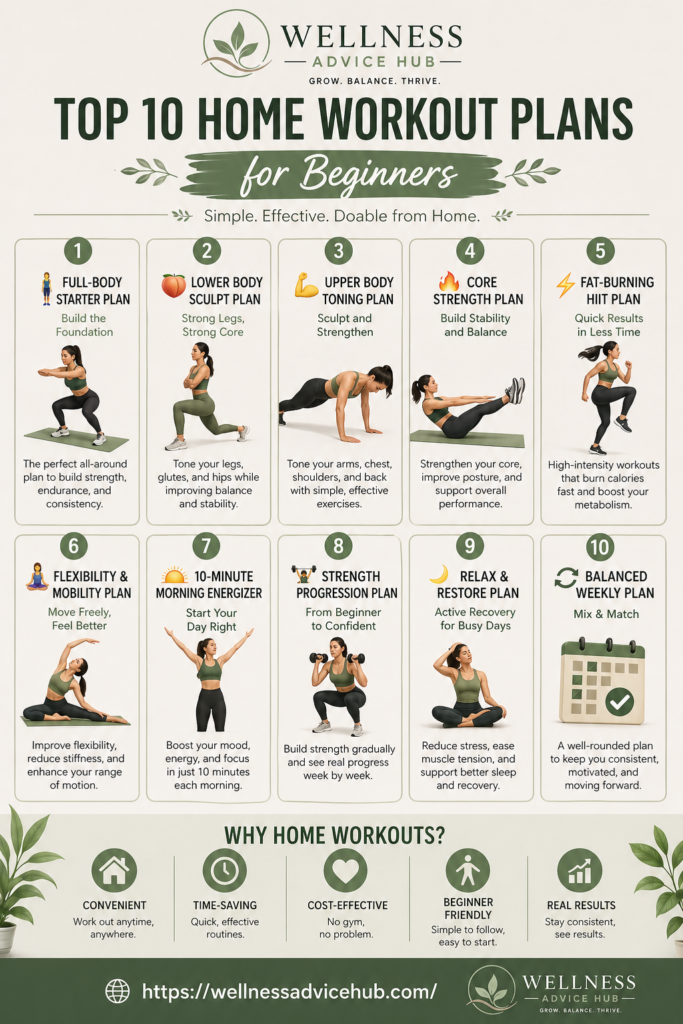
You do not need to follow all 10 home workout plans for beginners. Choose the plan that best fits your current fitness level and goals.
Can Beginners Work Out at Home Without Equipment?
Yes. Many beginner exercises can be performed using your body weight and a little open space. Squats, wall push-ups, glute bridges, bird-dogs, marching, step-touch movements, and mobility exercises are examples of movements that do not require gym equipment.
The World Health Organization’s physical activity recommendations also emphasize regular physical activity as part of a healthy lifestyle.
As you progress, you may choose to add resistance bands, light dumbbells, or other equipment. However, equipment is not a requirement for getting started.
4-Week Beginner Home Workout Schedule
A four-week plan can help you build consistency without trying to do too much too soon. You can use these home workout plans for beginners as a starting point and gradually increase the challenge as your fitness improves.
Week 1: Build the Habit
- 3 short workouts
- 15–20 minutes per session
- Focus on learning basic movements
- Include easy walking or mobility on other days
Week 2: Repeat and Stabilize
- 3 workouts
- 15–25 minutes per session
- Repeat familiar exercises
- Add a few repetitions when comfortable
Week 3: Add a Little Progress
- 3–4 sessions depending on recovery
- 20–30 minutes per session
- Add another round to selected exercises
- Include one low-impact cardio session
Week 4: Create Your Routine
- 3–4 sessions
- 20–30 minutes per session
- Combine strength, cardio, and mobility
- Keep at least one or two easier recovery days
At the end of four weeks, look at what you were able to maintain rather than only measuring how much harder you can exercise. A sustainable routine gives you something to build on.
Following one of these home workout plans for beginners for several weeks can make it easier to build a consistent exercise habit.
For additional guidance on exercise programming and physical activity, you can also refer to the American College of Sports Medicine’s physical activity resources.
Simple 7-Day Home Workout Schedule
If you prefer to plan one week at a time, this beginner-friendly schedule gives you a simple way to organize your home workout plans for beginners.
- Day 1: 15–20 minute full-body workout
- Day 2: 15–20 minute easy walk or mobility
- Day 3: Lower-body and core workout
- Day 4: Rest
- Day 5: Upper-body and full-body workout
- Day 6: Low-impact cardio or easy walking
- Day 7: Rest and recovery
You can move the days around according to your schedule. The goal is to create a pattern that you can realistically repeat.
How to Stay Motivated With Home Workouts
Motivation often changes from day to day. Instead of relying on motivation alone, make your workout routine easier to start.
- Choose a fixed time. A regular workout window reduces daily decision-making.
- Keep the first step small. Tell yourself you only need to start with five minutes.
- Prepare your space. Keep enough room available for your routine.
- Track consistency. Mark the days you complete your workouts.
- Use variety. Alternate strength, cardio, walking, and mobility to avoid boredom.
- Do not restart from zero. Missing a workout does not erase your progress.
Remember that the best home workout plans for beginners are not necessarily the hardest ones. They are the ones you can continue doing consistently.
Common Beginner Workout Mistakes to Avoid
Beginners sometimes make exercise harder than it needs to be. Avoiding a few common mistakes can make your routine more sustainable.
- Starting too intensely: Doing too much too soon can leave you excessively tired and make consistency harder.
- Skipping the warm-up: A few minutes of easy movement can help prepare you for the session.
- Chasing soreness: A workout does not need to leave you very sore to be useful.
- Ignoring technique: Quality movement is more important than completing a high number of repetitions.
- Exercising through pain: Stop movements that cause significant or unusual pain.
- Changing plans constantly: Give a simple routine enough time to become a habit.
- Expecting instant results: Fitness improvements take time and vary from person to person.
Frequently Asked Questions
What are the best home workout plans for beginners?
A simple full-body routine is a good starting point for many beginners because it can combine basic strength, mobility, and light cardio movements in one short session. The best home workout plans for beginners match your current fitness level and give you a routine you can perform consistently.
How many days a week should a beginner work out at home?
Three workout days per week can be a practical starting point for many beginners. You can add easy walking or mobility on other days while allowing enough time for recovery.
Can I lose weight with home workouts?
Home workouts can contribute to an active lifestyle and may support healthy weight management when combined with appropriate nutrition, sleep, and overall daily activity. Results vary from person to person, and exercise alone does not guarantee weight loss.
Is 15 minutes of exercise enough for a beginner?
Yes. A 15-minute workout can be a useful starting point, especially if you are currently inactive. As your fitness and confidence improve, you can gradually increase the duration or frequency of your workouts.
Can I work out at home every day?
You can move every day, but that does not mean every day should be a hard workout. Alternate more demanding sessions with walking, mobility, or rest days so your body has time to recover.
What should I do if an exercise hurts?
Stop the movement if it causes significant, sharp, or unusual pain. You may be able to use an easier variation, but persistent or concerning pain should be discussed with an appropriate healthcare professional.
The most useful home workout plans for beginners are those that are simple enough to follow and flexible enough to fit into real life.
Final Thoughts
Starting a workout routine at home does not have to be complicated. You can begin with a few basic exercises, 15–20 minutes, and a schedule you can realistically maintain.
As your fitness improves, gradually increase the challenge instead of trying to transform your routine overnight. Consistency, recovery, and good technique will take you much further than an overly ambitious plan that you cannot maintain.
Choose one of these home workout plans for beginners, give yourself time to adapt, and build from there.
Related Articles
- Full Body Workout at Home
- Best Leg Exercises at Home for Beginners
- Chest Workout at Home
- HIIT Workout at Home
- Workouts That Burn the Most Calories at Home
- Back Pain Stretches
Watch the Workout Video
About The Author